The People's Lawyer Sues union Age, the U.S. Embassy and the Sydney Morning Herald


sby, susilo bambang
MEMO - The Age, Sydney Morning Herald and the U.S. Embassy in Central Jakarta was sued to court. Australian media coverage of Wikileaks wire sourced from the U.S. Embassy regarding the President of Indonesia considered abusing. "It was cornered and tarnish Mr. President," a spokesman for U.S. Attorney People (SPR) Habiburokhman in Jakarta, Tuesday (15/3).
Habiburokhman explain, what is written Australia's media is an interpretation of Wikileaks cables. "Because of the paper can be read and purchased legally in Indonesia, then enter the jurisdiction of Indonesia. The news provoked from the great American imperialists, "he said.
He will register a civil lawsuit this afternoon to the Central Jakarta District Court. Right of reply to Australia's media loaded judged insufficient. "Still not fair right of reply mechanism, should be tried," he said.

The Age and The Sydney Morning Herald reported the allegations against the President who is deemed to have abused his power. Using a wire source who leaked Wikileaks U.S. Embassy, two of Australia's leading daily, wrote the President the power to take advantage of political interests.

Not only that, the news The Age also called Mrs. Ani Yudhoyono also has an active role in influencing the policy of her husband. Ani Yudhoyono also called having good relationships with employers, including wealthy businessman Tomy Winata.

However, all materials contained in Wikileaks it has been denied by all parties named in the document, including SBY, JK, Sudi Silalahi, TB Silalahi, and Tomy Winata.


The loss of Chinese lawyers


Gao Zhisheng
The mystery of the loss of Chinese rights lawyer Gao Zhisheng to continue after the foreign minister made the comments about Gao. Foreign Minister Yang Jiechi said the well-known lawyer was convicted of subversion.

"Gao Zhisheng was convicted of undermining state power," said Yang at a press conference with British Foreign Minister's visit to China.

China's foreign minister denied that Gao was tortured saying his rights remain protected. He also expects foreigners to respect China's judicial system.

"We are willing to discuss human rights with the UK and other countries based on mutual respect and non-interference in each country," said Yang.

Not yet clear whether the reference to mistakes in the past or new charges against Gao.

Chinese foreign ministry declined to comment the explanation is.

The international community is increasingly concerned about the fate of activists who disappeared over a year ago.

British Foreign Secretary David Miliband said it had asked the lawyer to the case of the Chinese government.

Gao was jailed for three years for committing subversive activities in 2006.

Gao disappeared at the beginning of last year.

He was allegedly in police custody even though no one can tell.

No official statement issued many related cases Gao, and some official comments contradict each other. State Department spokesman earlier this year said that Gao "was in its proper place." Last month, the Chinese embassy in the United States telling the American human rights organization, the Dui Hua Foundation that Gao was working in Urumqi, in western China.


Law system adopted by the United States


Constitution of the United States is a federal system of government established. The Constitution Gives Certain powers to the federal government (national). All other powers not Delegated to the federal government will still be run by the states. Every section fifty states has its own constitution, its own governance structure, the statute book Itself, and the court system Itself. The U.S. Constitution also established the judicial branch of government detailing the powers of federal and federal courts. Federal courts have exclusive authority over courts Certain types of cases, for example cases involving federal law, Disputes Between section states, and cases involving foreign Governments. In the areas More specific, the federal courts share the judicial power by the courts of the country.

For example, federal courts and courts both countries should Decide cases involving the parties disputants WHO Reside in different states. Courts of the country has exclusive power over judicial cases Generally very broad. The parties to the dispute have the right to trial by jury in all criminal cases and civil cases Generally. The jury usually consists of a panel totaling twelve citizens heard testimony and apply laws, expressed by the judge, in an effort to Achieve joint decisions based on the evidence disclosed during the jury confirm it by looking at the testimony in court. Thus Spake although, the legal dispute in the United States in general can be solved before the case Reaches the jury. These cases are resolved by a vote of legal or payment initiative, not by the court.
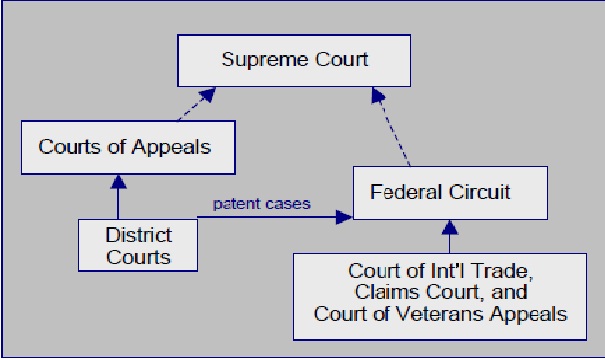
The system structure is the Federal Constitutional Court of the United States that make up the United States Supreme Court and gives Congress the power to establish lower federal courts. Congress has established two ratings that federal courts under the Supreme Court: District Courts and the United States circuit courts of Appeals United States. District courts are courts of the United States first in the federal system. There are a number of 94 district courts across the United States. At least one district court located in each state. The judges of each district to sit to listen to a variety of cases. In addition to district judges, bankruptcy judges are also there (who only hear cases of bankruptcy) and the magistrate judge (who run a variety of duties under general supervision of judicial district judges) located in the district courts.

Circuit Courts of Appeals United States ranks next. There are a total of 12 high-level courts are located in different areas of the U.S. land area. A panel of three judges hear an appeal, an appeal from the district courts. The parties who have filed a case may petition / appeal regarding the legal rights to the circuit Courts of Appeals (with the exception that the government has no right to appeal in a criminal case if the verdict is not guilty). The circuit courts also hear this area of the decisions made by federal administrative agencies. One of a series of non-local courts (Federal circuit) is to hear an appeal, an appeal in specific cases such as cases involving patent laws and lawsuits against the federal government. The peak of the federal court system is the Supreme Court of the United States, which was formed from nine justices who sit together in listening to these cases. Its discretion, the U.S. Supreme Court will hear an appeal, may appeal from the circuit federal appeals courts, as well as to be performed by the highest courts of the country if the appeal concerns the United States Constitution or federal law.